

Why Is My FSH Level High?
If you have ever stared anxiously at your blood test report and wondered, “Why is my FSH level high?”—you are not alone. Many women facing difficulties with fertility find themselves tangled in a web of confusing numbers, medical jargon, and well-meaning but often unhelpful advice. What does a high FSH really mean for your chances of conceiving? Is it as bleak as it sounds, or is there more to the story? This article will walk with you through these questions, untangling the medical facts and the emotions that come with them.
Understanding FSH: The Messenger Hormone
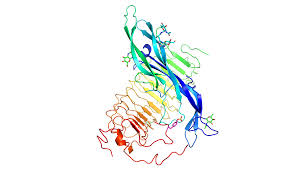
FSH stands for Follicle Stimulating Hormone. Think of it as one of the body’s natural messengers—a chemical signal made in your brain that tells your ovaries to get to work. Every month, your pituitary gland (a tiny, pea-sized gland at the base of your brain) sends out FSH, which travels through your bloodstream to your ovaries. Its main job: to stimulate the growth of egg-containing follicles, giving you the chance to ovulate and conceive.
- FSH works alongside another hormone called LH (luteinising hormone), both released by the pituitary gland.
- Throughout your menstrual cycle, FSH levels naturally rise and fall, peaking just before ovulation.
- Doctors typically measure your FSH on Day 2 or 3 of your menstrual cycle—this is when it gives the clearest window into how your ovaries are functioning.
- FSH is often checked together with LH and estradiol (an estrogen produced by your ovaries) for a fuller picture.
If you are confused by these hormone names or numbers, you are not alone. Most women come into our clinic feeling overwhelmed by test reports. It is completely normal to have questions or doubts about what these numbers mean for your fertility.
Ovarian Reserve: What High FSH Is Really Telling You
One of the key things your FSH level can reveal is your ovarian reserve—the number and quality of eggs left in your ovaries. A high FSH does not mean you have more eggs. In fact, it usually means the opposite.
- Ovarian reserve refers to the number of eggs you have left for fertilisation.
- A high ovarian reserve means you have a good number of viable eggs.
- A low ovarian reserve means your egg supply is getting depleted.
Your body is smart. When it senses that your ovaries are not responding as well as they used to, your brain pushes out more FSH to try to “wake up” the ovaries. So, a high FSH level is your body’s way of working overtime to stimulate your ovaries. This is why high FSH is often seen in women whose egg numbers or quality have dropped—a condition sometimes called oopause.
If this sounds confusing or overwhelming, you are not alone. Many women naturally think, “If FSH is supposed to stimulate follicles, shouldn’t a high FSH mean more eggs?” Unfortunately, in this case, more is not always better.
A high FSH is like your body stepping harder on the accelerator because the engine is not responding—it is a sign your ovaries need more stimulation, not that more eggs are available.
Want to understand the connection between high FSH, oopause, and poor ovarian reserve? Read more in our detailed article: High FSH Levels, oopause and poor ovarian reserve
How High Is Too High? Interpreting Your FSH Results
It is natural to want clear numbers, but FSH results can vary depending on the laboratory and your unique biology. However, some general guidelines can help make sense of the numbers:
- Normal FSH: Typically between 3 mIU/ml and 10 mIU/ml (measured on Day 3 of your cycle).
- FSH above 12 mIU/ml: This can suggest a decreased ovarian reserve. Many clinics consider this level as a warning sign that egg numbers are lower.
- FSH above 25 mIU/ml: Strongly suggests ovarian failure, commonly seen in menopausal women.
- Low FSH (<2 mIU/ml): Can be seen in conditions where the brain is not sending enough signals to the ovaries (like certain hormonal disorders, birth control use, or pregnancy).
- FSH can be falsely elevated if you have recently taken ovulation-inducing medications like clomiphene citrate (Clomid).
But FSH alone does not tell the whole story. Estradiol, another hormone measured at the same time, can help clarify things. For example, if your estradiol is high (above 75 pg/ml) on Day 3, it can make FSH look normal even when ovarian reserve is low. This is why your doctor will often check both hormones together.
- High estradiol with normal FSH can “mask” a poor ovarian reserve.
- Both normal FSH and estradiol usually mean a good ovarian reserve.
- If either is abnormal, more testing is needed before drawing any conclusions.
If you are feeling lost in these numbers, remember: doctors do not treat lab reports—they treat people. FSH is just one piece of your story.
Curious about whether you can lower your FSH? Read our advice here: How can I reduce my FSH levels?
FSH, Age, and Other Fertility Markers
Age is a powerful factor in fertility. Even with a high FSH, younger women may still have better chances of getting pregnant than older women with the same result. For example, women over 43 generally have lower pregnancy rates, no matter what their FSH level is. This means that if you are younger and your FSH is high, there may still be a chance to conceive with your own eggs before considering other options.
No single test is perfect. Other ways to check ovarian reserve include:
- AMH (Anti-Müllerian Hormone) blood test: Gives a direct measure of remaining egg supply.
- Inhibin B test: Another hormone related to ovarian function.
- Antral follicle count: An ultrasound that counts small follicles in the ovaries.
It is important to realise that none of these tests can predict your fertility with certainty. If there were a single perfect test, we would only use that! The reality is, every woman’s situation is unique, and your body’s response to fertility treatment tells us more than any number ever could.
Your response to superovulation—how your ovaries react to stimulation during fertility treatment—is ultimately the best test of your ovarian reserve.
Special Cases: PCOD and FSH/LH Ratios
If you have polycystic ovarian disease (PCOD), your FSH and LH levels may tell a different story. Normally, FSH and LH are about equal. In PCOD, LH is often much higher than FSH (the ratio is reversed, sometimes 2:1 or more). This pattern is part of what helps doctors diagnose PCOD and tailor your treatment.
- Normal FSH:LH ratio is around 1:1
- PCOD usually shows a higher LH compared to FSH
FSH in Testing and Treatment: What’s the Difference?
It can be confusing, but FSH is both a hormone your doctor tests for, and a medication used in fertility treatment. When used as a medication (under brand names like Follistim or Gonal-F), it helps stimulate your ovaries to produce more eggs during IVF or other fertility treatments. This is different from measuring your natural FSH to check ovarian reserve.
What Should You Do Next?
If your FSH is high, it is completely normal to feel worried, frustrated, or even hopeless. Many women feel like the numbers are stacked against them, or that their dream of motherhood is slipping away. The truth is, while high FSH can mean your egg supply is lower, it does not mean pregnancy is impossible. It just means your path may require more thoughtful planning and timely action.
At Malpani Infertility Clinic, we believe in honest, no-nonsense guidance. We help you understand what your numbers actually mean for you. Together, we can map out realistic options—whether that means exploring superovulation, IVF, or even considering donor eggs. The most important step is to make decisions based on facts and on your personal situation, not just on fear or confusion.
of women with high FSH levels over 35 can still produce eggs for treatment, although options may need to be adapted for best results.
Frequently Asked Questions
Q: What is a normal FSH level for fertility?
A: A normal FSH level on Day 2 or 3 is typically between 3 and 10 mIU/ml. Levels above 12 mIU/ml may indicate reduced ovarian reserve, and levels above 25 mIU/ml usually point to ovarian failure.
Q: Can I get pregnant if my FSH is high?
A: Pregnancy is still possible with high FSH, especially if you are younger. However, it may be harder and require tailored treatment. Consultation with a fertility expert is strongly recommended.
Q: What other tests should I consider along with FSH?
A: AMH, estradiol, inhibin B, and antral follicle count are all important in assessing ovarian reserve. Your doctor may suggest a combination of these to get a complete picture.
Q: Does a high FSH mean I need egg donation?
A: Not always. Some women with high FSH can still conceive with their own eggs, especially if they respond well to stimulation. Others may be advised to consider donor eggs if response is poor.
Q: What can make FSH levels go up or down?
A: FSH can be affected by age, ovarian reserve, certain medications, stress, and overall health. Hormone medications and fertility drugs can also change FSH levels temporarily.
Q: How often should I repeat FSH testing?
A: Your doctor will advise you. FSH can vary from cycle to cycle, so it may be repeated if results are unclear or if your clinical situation changes.
Q: What is the difference between FSH as a test and as a medication?
A: Testing FSH measures your natural hormone level to assess ovarian reserve. FSH medication is used to stimulate your ovaries in fertility treatments like IVF.